

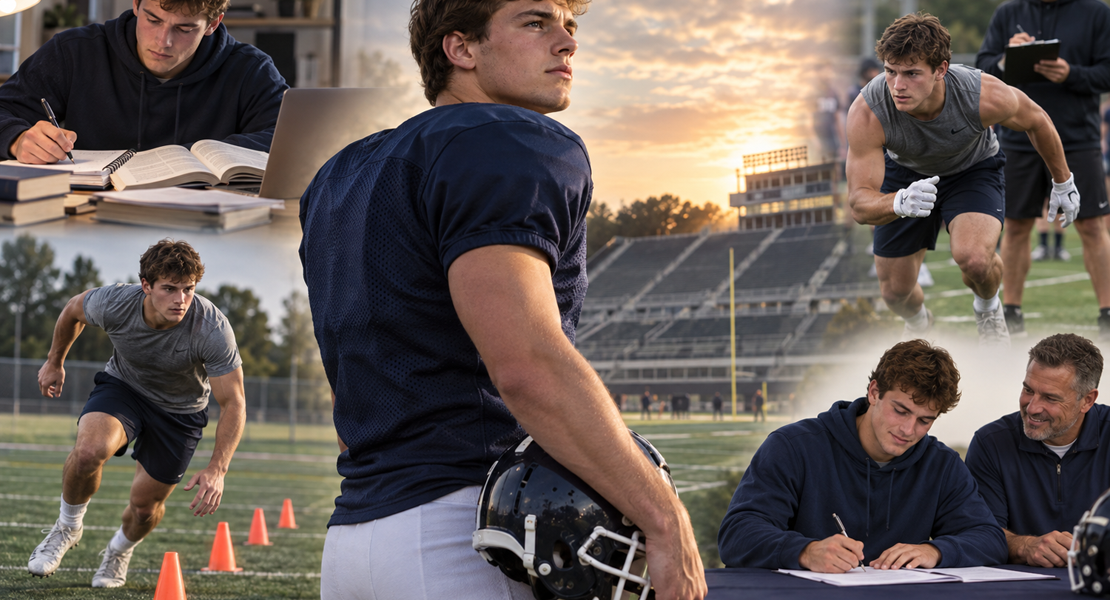
For student-athletes who dream of playing sports in college, recruiting can feel overwhelming. Which coaches should you contact? When should you reach out? What should you send them? How do you get noticed when thousands of other athletes are trying to do the same thing?
The good news is this:
You don’t have to sit around hoping a college coach discovers you.
With a DIY approach to college sports recruiting, you can take an active role in your future, build your own recruiting presence, communicate directly with college programs, and create more opportunities to be evaluated.
At PlaceBig.com, we believe student-athletes should learn how to Prepare. Play. Publish for Scholarships!
What Is DIY College Sports Recruiting?
DIY college recruiting means taking ownership of your recruiting journey instead of relying entirely on a coach, recruiting service, tournament, showcase, or someone else to promote you.
That doesn’t mean you have to do everything alone.
Your parents, coaches, trainers, teachers, and mentors can all help. But you should be at the center of your recruiting process.
After all, it’s your education, your athletic career, and your future.
A strong DIY recruiting strategy involves building Your Athletic Profile Website, identifying colleges that fit your goals, creating quality video, communicating with coaches, tracking your contacts, attending the right events, and consistently updating coaches on your progress.
Stop Waiting to Be Discovered
One of the biggest mistakes a student-athlete can make is assuming:
“If I’m good enough, college coaches will find me.”
Some athletes receive attention naturally because of where they play, the events they attend, or the exposure they already have. Many others need to actively introduce themselves to college programs.
Think of recruiting as an introduction.
A college coach can’t evaluate an athlete they don’t know exists.
That’s why athletes should make it easy for coaches to quickly find the information they need: your graduation year, position, academic information, athletic accomplishments, statistics, schedule, video, contact information, and other relevant details.
Your job isn’t to convince every college coach to recruit you.
Your job is to create opportunities for the right coaches to evaluate you.
Build Your Recruiting Identity
Your recruiting presence should tell coaches who you are as both an athlete and a student.
Start with a complete recruiting profile that gives coaches an organized snapshot of you.
Include information such as:
- Name and graduation year
- High school and club/team information
- Primary and secondary positions
- Height and other sport-relevant measurements
- Athletic statistics
- Academic information
- Awards and accomplishments
- Highlight and skills videos
- Upcoming game, tournament, showcase, or competition schedule
- Coach references when appropriate
- Contact information
Keep your information accurate and update it throughout your high school career.
Don’t build your recruiting profile once and forget about it. Build it as you build your career.
Video Can Open the Door
College coaches have limited time.
A strong recruiting video can give a coach an opportunity to evaluate you before ever seeing you compete in person.
Your video doesn’t necessarily need expensive production. It needs to make it easy for a coach to identify you and evaluate relevant skills.
Depending on your sport, consider including skills footage, game footage, measurable athletic information, and short highlights that demonstrate your abilities.
Avoid making coaches search through a long video just to find you.
Identify yourself clearly and get to the action.
And remember: video should support your recruiting story—not replace actual competition, academics, communication, and coach evaluation.
Build a College Target List
Don’t start by sending the same message to hundreds of colleges.
Start by researching.
Consider the schools that may fit you academically, athletically, financially, geographically, and personally.
Your list can include programs from different college athletic organizations and competitive levels.
Then divide your schools into groups based on your level of interest and continue adjusting your list as you learn more.
The goal isn’t simply to find the biggest-name program.
The goal is to find colleges where you can succeed as a student, athlete, and person.
Contact College Coaches
Once you’ve identified programs you’re interested in, start communicating.
Introduce yourself.
Tell the coach why you’re interested in the school and program. Provide the important information needed to evaluate you and give the coach an easy way to access your recruiting profile and video.
Whenever possible, personalize your communication.
Instead of sending:
“Hi Coach, I’m interested in playing for your school.”
Give the coach a reason to believe you actually researched the program.
Mention something specific about the school, academic program, team, or opportunity that interests you.
And don’t assume one unanswered email means the coach isn’t interested.
College coaches are busy. Appropriate follow-up is part of recruiting.
Put Yourself Where Coaches Can Evaluate You
Games, tournaments, showcases, camps, combines, and other events can be valuable recruiting opportunities—but attending events simply because they’re labeled “recruiting” doesn’t guarantee exposure.
Before spending the money, ask questions.
Which colleges typically attend?
Are programs you’re interested in expected to be there?
Does the event fit your current ability level and recruiting goals?
Can you contact those coaches beforehand and let them know where and when you’ll be competing?
Have a purpose for the events you attend.
Your recruiting budget matters, and your time matters.
Academics Are Part of Recruiting
Don’t make the mistake of treating academics as something separate from athletic recruiting.
Your grades, courses, test scores when applicable, intended major, admissions requirements, and eligibility requirements can all affect your college opportunities.
Start paying attention to academics early.
Research the admissions and athletic eligibility requirements that apply to the colleges and athletic organizations you’re considering.
A great athletic opportunity isn’t much of an opportunity if the school isn’t a good academic fit.
Parents: Be the Support Team, Not the Recruit
Parents can play an important role in the recruiting process.
Help your student-athlete stay organized. Help research colleges. Discuss finances. Help plan travel. Ask questions and provide guidance.
But whenever appropriate, encourage your athlete to communicate directly with college coaches.
College recruiting is also an opportunity for young athletes to develop independence, confidence, communication skills, responsibility, and decision-making skills.
Those lessons can be valuable long after their playing career ends.
Recruiting Is a Process, Not a Single Event
There probably won’t be one email, tournament, video, camp, or conversation that determines your entire future.
Recruiting is usually a collection of actions over time. Email coaches your domain’s site every time there is a need to communicate a change in your activity!
Build your profile on your website.
Create video.
Research colleges.
Contact coaches.
Follow up.
Update your information.
Improve academically.
Improve athletically.
Attend appropriate events.
Build relationships.
Then repeat.
Every step helps you become more informed and gives coaches another opportunity to learn about you.
Don’t Measure Your Journey Against Someone Else’s
Another athlete may receive attention earlier than you.
Someone on your team may get an offer before you.
A player you compete against may have more followers, better statistics, or more exposure.
That’s their journey.
Focus on yours.
Continue improving, communicating, researching, and creating opportunities.
Recruiting isn’t about collecting the most attention.
It’s about finding a college opportunity that’s right for you.
Own Your Journey
You can’t control every part of college recruiting.
You can’t control which coaches need your position, their roster openings, recruiting budgets, admissions decisions, scholarship availability, or which athletes a program ultimately chooses.
But you can control your preparation.
You can control your effort.
You can control how professionally you communicate.
You can control how well you research your opportunities.
You can control whether your recruiting information is current.
And you can control whether you sit back and wait—or actively participate in your future.
That’s what DIY college sports recruiting is really about.
Taking ownership.
At PlaceBig.com, our goal is to help student-athletes create their recruiting presence and take a more active role in pursuing college opportunities.
Prepare. Play. Publish for Scholarships!
Don’t wait to be discovered. Start building your recruiting journey today at PlaceBig.com.